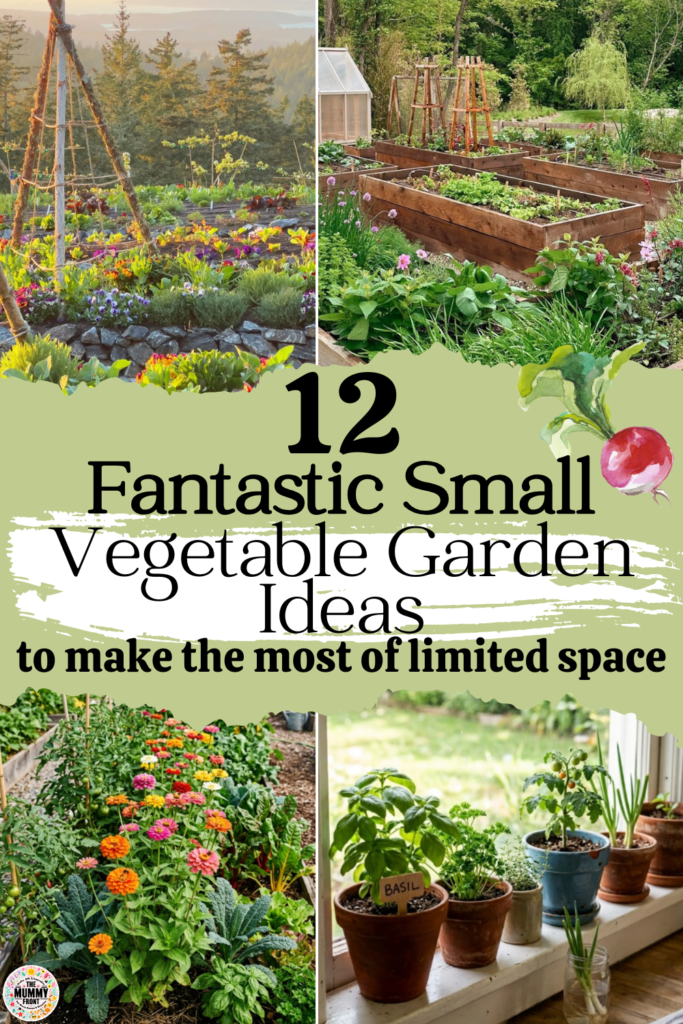
Finding great small vegetable garden ideas can help you turn even the smallest outdoor space into something productive, pretty, and genuinely satisfying. Growing your own food doesn’t require a large yard or a big space. Smart layouts, clever crop choices, and a combination of raised beds, pots, and container gardens can allow you to enjoy a lovely little harvest all season long, no matter how much room you have outdoors.
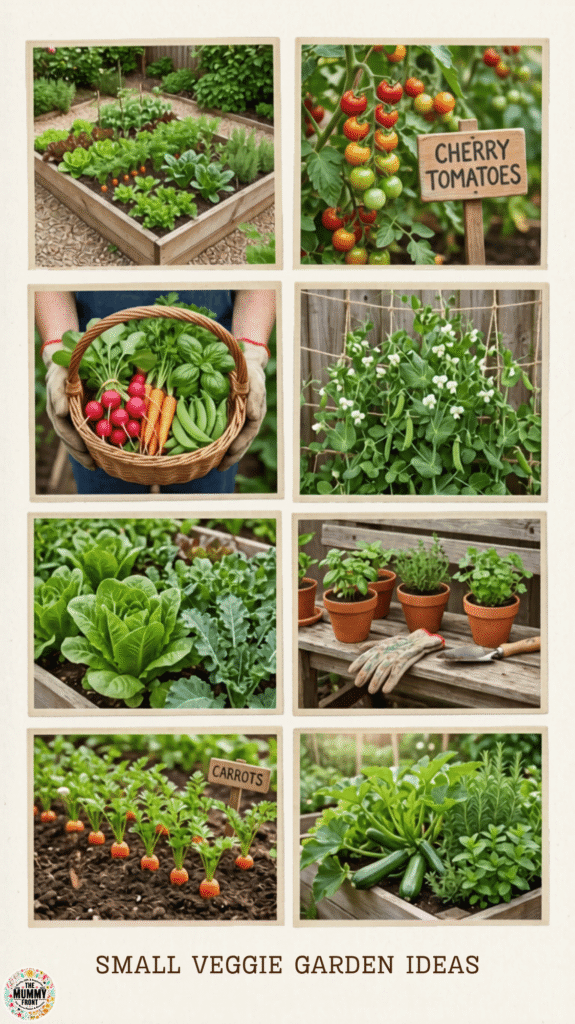
Small vegetable gardens also feel more manageable, which is another lovely benefit. Everything is easier to water and weed when your plot is small. You can also keep track of what is growing well (and what isn’t) without having to spend hours every week in the garden. Even if you only have space for a small garden, a balcony, or even a windowsill with some sunny space, there are tons of incredible ideas for putting together a setup that looks and feels useful.
P.S. Don’t forget to Pin This for later!

Pay attention to your space and make everything earn its place
Instead of trying to cram a million different crops into your outdoor space, small gardens usually feel more beautiful and intentional when everything is carefully planned. Rather than guessing at what you want to grow, take a few extra minutes at the start and think about how your vegetable garden will look and function.
The first thing to do is take a good look at your space. Before you decide what to grow with your small garden ideas, make sure you know where things like sunlight and shade fall throughout the day. Does your outdoor space have enough room for raised beds? Would you prefer large containers or smaller pots clustered together?
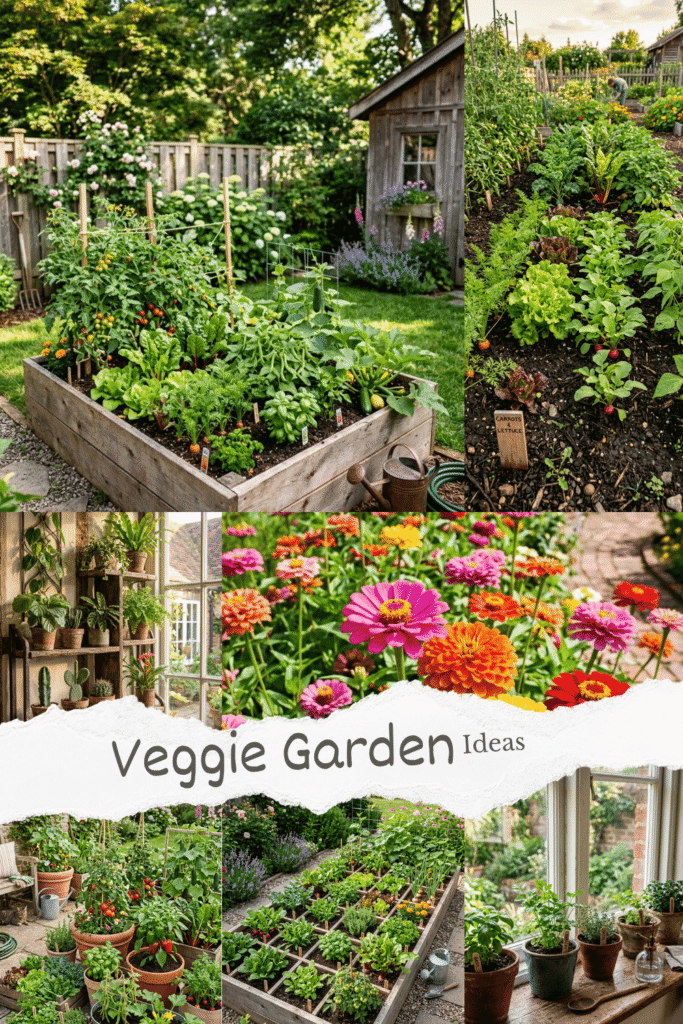
Take note of how much sunlight your little garden will get as well. Most vegetables thrive in full sun, so this can have a major impact on your crop choices and layout. If your growing space only gets sunlight in one area of the yard, you’ll have the right spot for your largest and most productive plants.
Another secret to small vegetable gardens is making everything easy to access. If your plants are near a water source and you don’t have to strain or reach to get to them, you will find that you are far more likely to keep up with daily gardening chores. Access isn’t something most people think about before planting, but it can make a huge difference in a small space.
You can mix and match beds, pots, and containers
Decide what kind of layout will work best for your space. Some gardens look gorgeous with raised beds, while others feel more charming with mismatched containers or nursery pots. There’s no right or wrong answer when it comes to your garden beds, but there are some things to consider before making a choice.
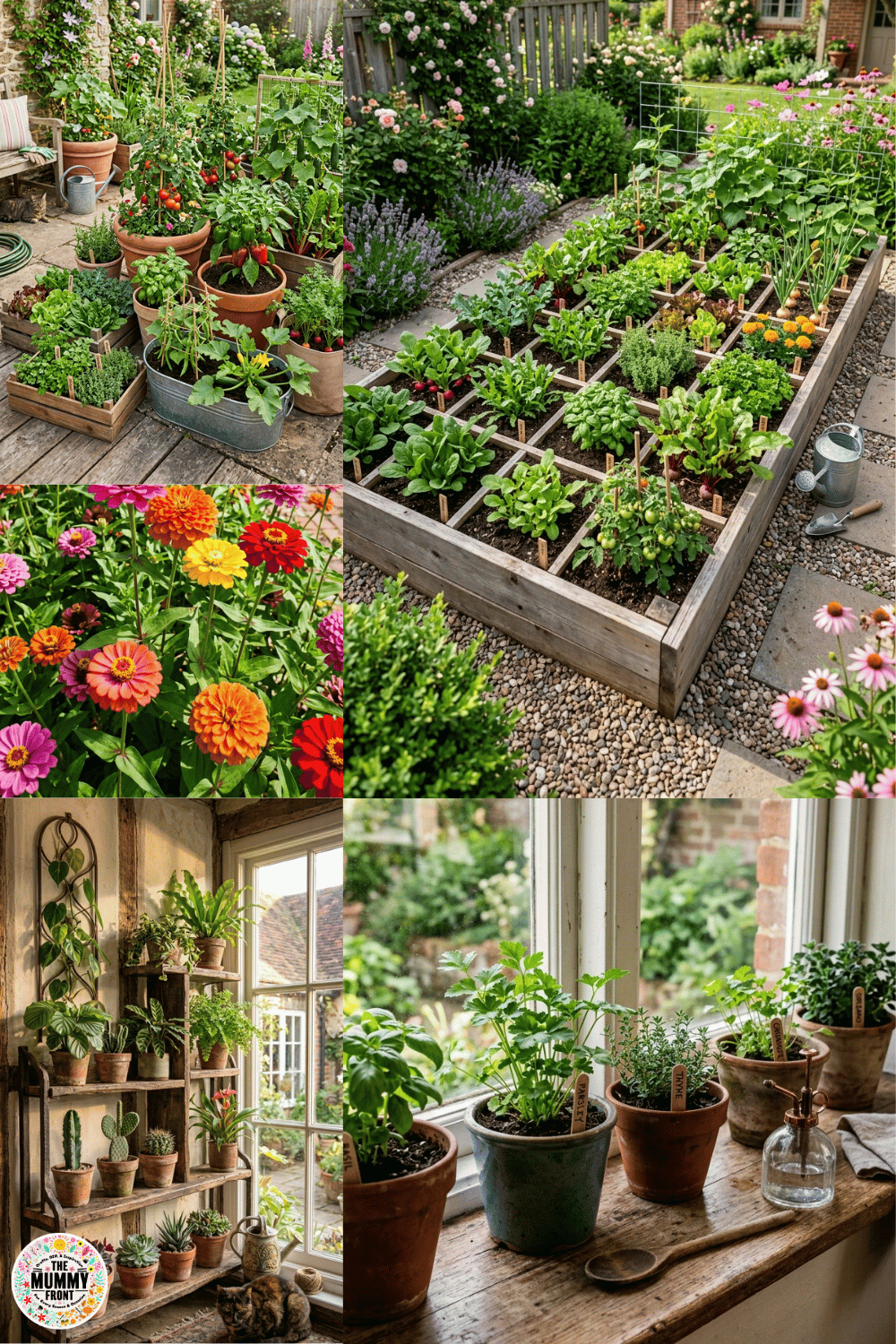
Think about how permanent you want your garden to feel. A raised bed can be relocated pretty easily, but it feels more permanent than pots or small containers. Large containers also take up more space, so they are better for smaller gardens and outdoor areas.
No matter which you choose, preparing your soil before planting is always a good idea. Grabbing a simple soil testing kit is especially useful for small gardens. Amending your soil with compost or other organic matter can improve your garden’s texture, drainage, and overall growing conditions which can help you grow healthier crops.
1. Create a small raised bed for an easy beginner garden
One of my favourite ways to start small is with a small raised bed. This works especially well if this is your first garden ever, and you want things to feel manageable. A raised bed creates a neat appearance with defined garden beds. It instantly makes your small space feel more intentional. Plus, raised beds look amazing filled with plants! One small raised bed can transform your small garden.
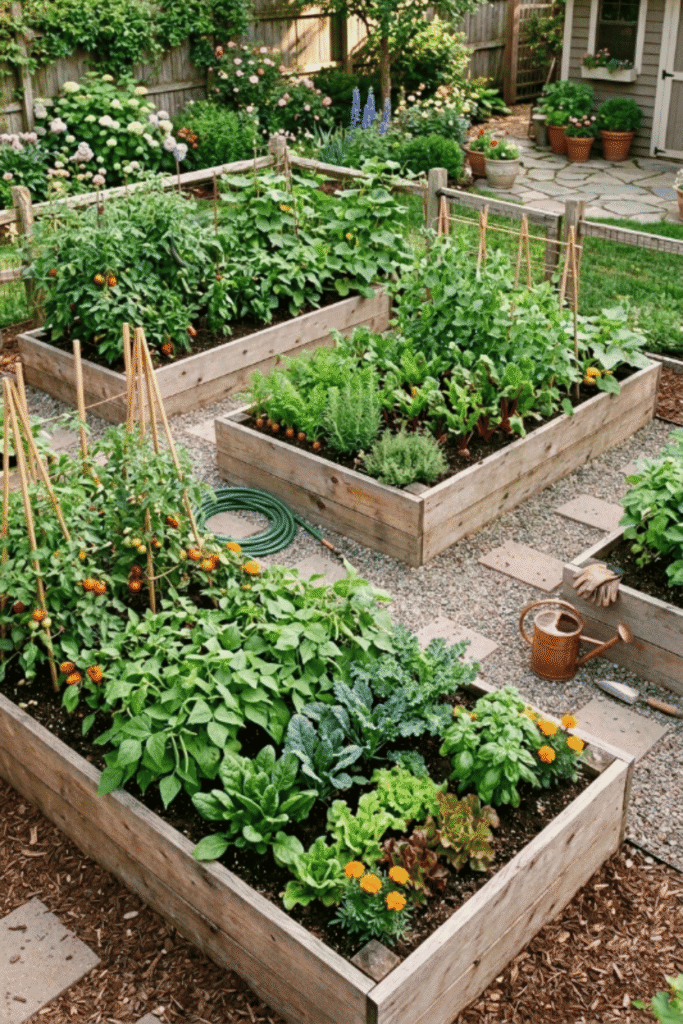
Raised beds offer other advantages too, like more control over your growing environment. You can fill them with high quality garden soil, improve drainage and bypass some of the problems of gardening in less than ideal ground. If your soil is clay-heavy, uneven or generally lacks vigour, a raised bed might make gardening easier.
Raised beds can also make a small space feel more practical. Rather than having unused space around the edges of your garden or awkward pathways through it, raised beds create neat and accessible garden beds. They also look tidy, which can really help in a small space.
For beginners I recommend starting with a small raised bed rather than diving right into multiple beds. One raised bed gives you space to grow a small assortment of vegetables without being overwhelming. If you want your first garden to be low-fuss, productive and enjoyable, a single raised bed is the way to go.
2. Plan your garden with square foot gardening
Square foot gardening is another great strategy for those small gardens. It gives you a strategy for using all of the space in your garden without overcrowding it. Instead of gardening in long rows, you section off your space into small squares. Every vegetable has its place. Not only does this help with organisation, but it can also allow you to grow more in a smaller space.
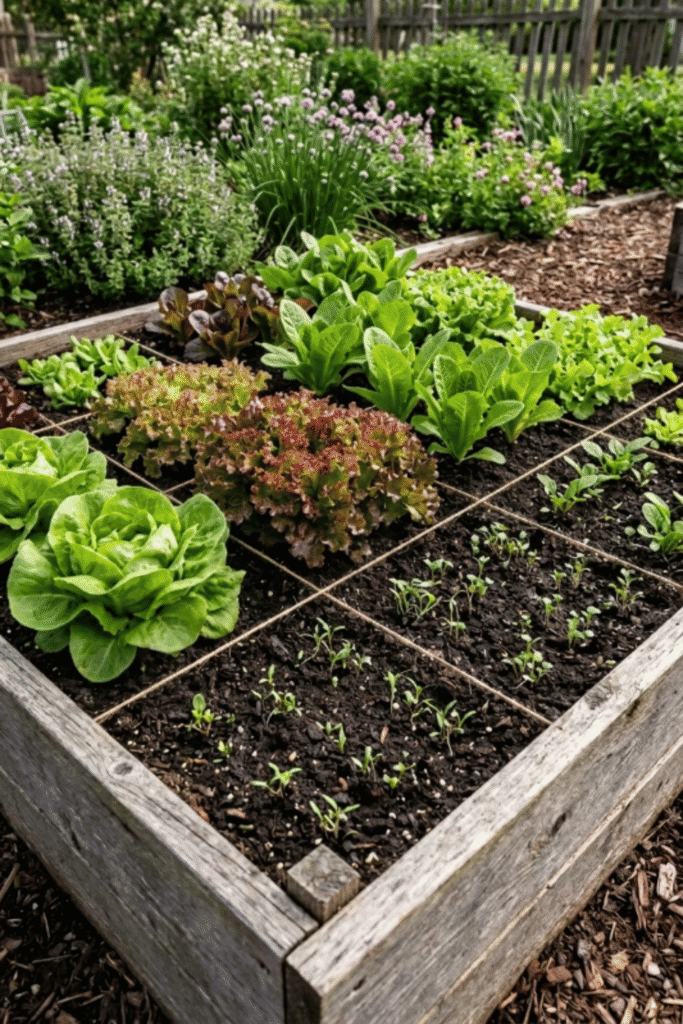
Square foot gardening can help prevent the empty patches that sometimes appear when you just plant with the flow of the garden. When you’re intentional about where everything goes, you can use every square inch. As the name suggests, this gardening style can really help you make the most of your square footage.
Believe it or not, square foot gardening can also simplify the planning process. Instead of staring at a blank bed or plot and wondering what to do, you can break your garden into squares. Think of each square as a place for a particular plant. This system works really well with smaller vegetables like leafy greens, carrots, herbs, and bush beans.
If you want a tidy, well-organised small vegetable garden, give square foot gardening a try. Not only can it make things look beautiful, but it can also help you think about spacing. Square foot gardening has been around for years and is a great way for beginners to create solid plans and maximise small spaces.
3. Grow vegetables in big pots and containers
Container gardens work so well in small spaces because they allow you to grow vegetables almost anywhere you like. Patio areas, paved spaces, and oddly shaped corners that would otherwise be wasted can be filled with large pots and containers that look both useful and attractive. They’re perfect if you lack ground space but would still love to be able to grow your own veggies.
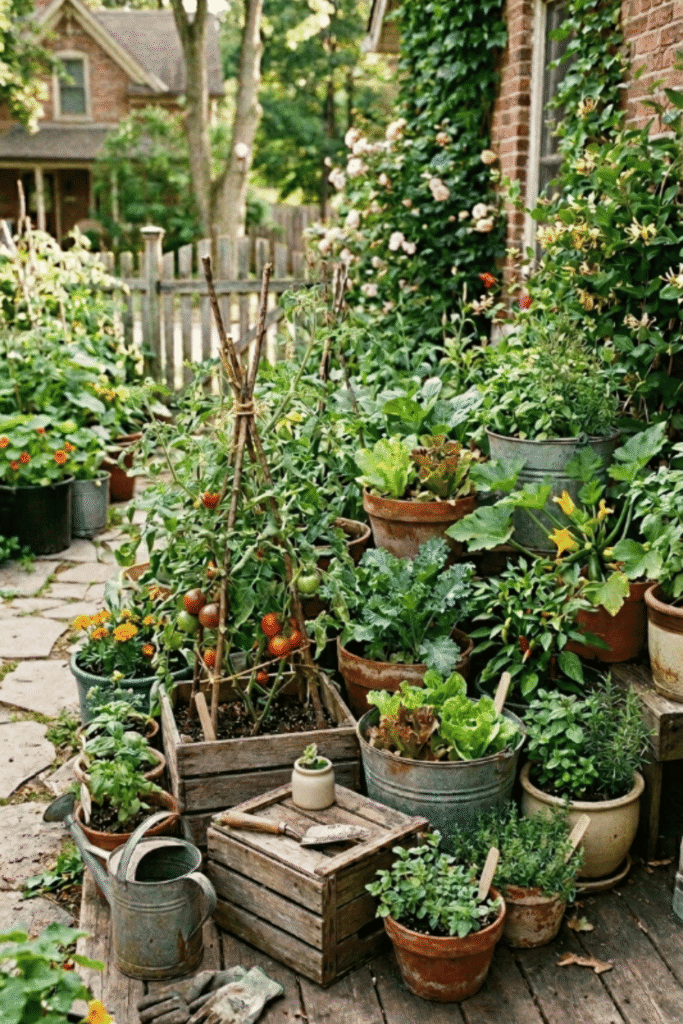
Containers can also offer more flexibility in your layout. You can move pots into a sunny spot or around the house as the season demands, and use odd tight corners that aren’t suitable for beds and borders. Grouping pots together on a patio or smaller outdoor area can also help you to fit more plants into the space you have.
Growing vegetables in pots can also provide better drainage for anything that hates becoming waterlogged. Planting in pots will create a more dependable environment if your soil stays heavy or wet for long periods. You’ll also have more control over the compost or soil mix you use, which can make all the difference to your plants.
Big pots are ideal for crops that like a lot of root space. Tomatoes, potatoes, peppers, and bushy plants such as beans will all flourish in larger containers. Even a small vegetable garden can feel full and plentiful if pots are grouped together. Don’t have space for beds and borders? Think about bulky pots instead.
4. Fit window boxes for herbs and salad leaves
Window boxes are ideal if you’re keeping things small or have very limited outdoor space. Herbs, salad leaves, and small crops will all do brilliantly in window boxes that sit on your windowsill or around your patio area. You can soon make the most of a tiny outdoor space by ensuring every spare inch is put to good use.
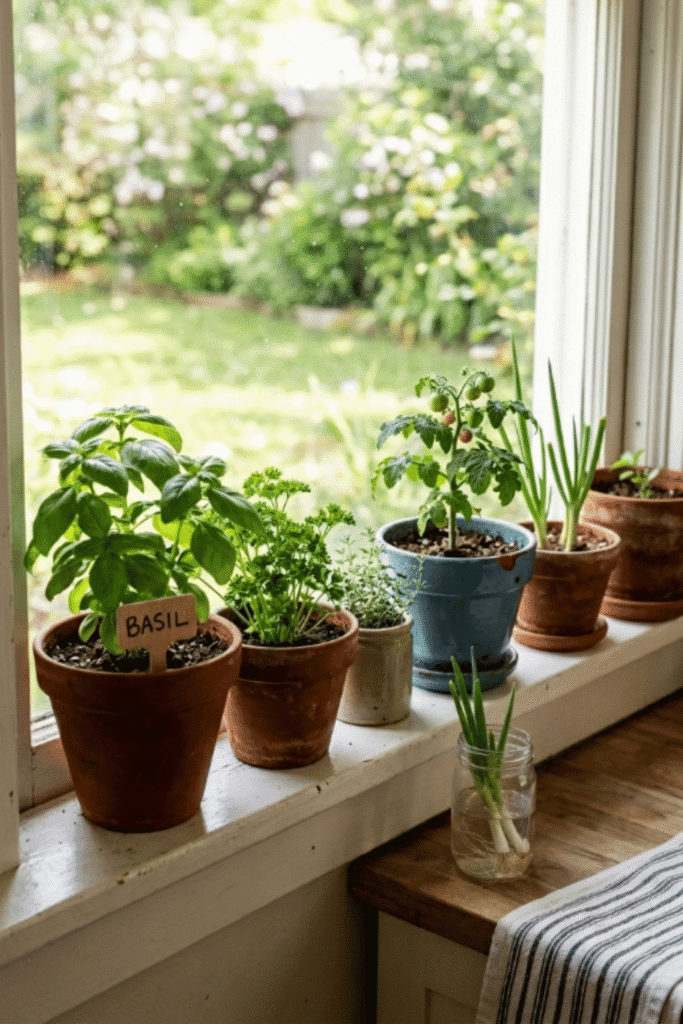
Many plants will happily grow in a window box, making them great if you’re pushed for room. Small crops, herbs, and salad leaves will fill out a window box nicely without taking over your space. If you have nowhere for raised beds or large pots, you can still create a simple homegrown system in your backyard.
Leafy greens and salad leaves will grow particularly well in window boxes because they don’t need miles of soil and can be harvested frequently. Herbs are another great option for this reason; many people find it satisfying to pop outside and pick a few herbs for lunch or dinner. It might seem like a little way to garden, but trust me – it’s still worth it.
Window boxes can instantly soften the look of your small vegetable garden. Small pots and trays make your outdoor space seem more layered and styled, instead of just practical. In a tiny space, any detail you can add really helps the whole garden to feel inviting.
5. Grow up instead of out with vertical space
Making the most of limited floor space can be as simple as taking better advantage of the space above your head. By growing vertically, you can fit more into a tiny vegetable garden without overwhelming your harvest or leaving yourself too much to do. It doesn’t require any major sacrifices or investments either… growing up is just such an easy way to expand the space you have.
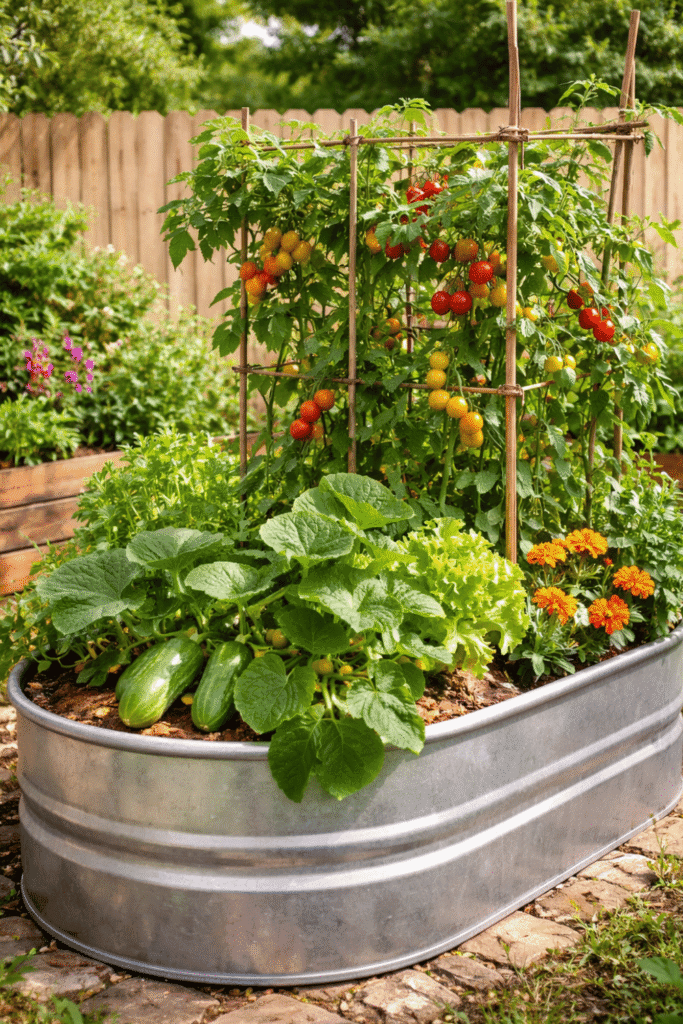
Things like pole beans are ideal because they’ll climb given the chance and don’t require all that much space on the ground. Pole beans offer a lot of produce without too much work and can even make harvesting easy if you grow them up a support structure to keep all the pods neatly visible. Rather than lying across the ground your beans can take advantage of space you’ve already got.
Even just installing a tomato cage can offer some vertical support without sacrificing valuable floor space. Tomato cages help keep the plants contained as they grow upward, support ripening fruit, and can make your whole setup feel more tidy. There are also options like trellises, bamboo canes, or making your own frame to support climbing veggies and open up space below.
It can be particularly helpful to incorporate these ideas into small gardens just because it allows you to better utilize your space. Instead of spreading plants wide, you’ll find vertical growth can help keep your garden feeling neat and ensure every plant is easier to reach. Whittling down the excess until only the essentials remain can sometimes bring your garden together.
6. Pick easy vegetables that will thrive in your space
Another great way to maximize a small vegetable garden is to fill it with vegetables that you know will grow well and don’t require too much effort. Not every crop is ideal for a beginner gardener, and when your space is limited you’ll want to focus on plants that reward your efforts. Generally speaking, easy vegetables are ideal beginner plants that can help your garden truly thrive.
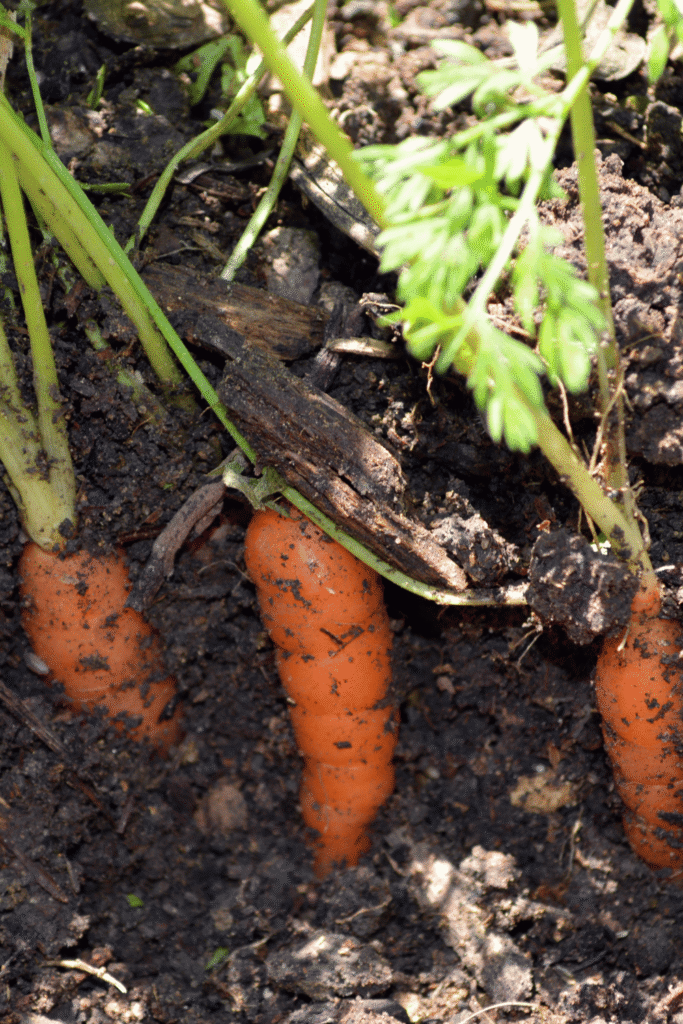
Bush beans are one of my favourite examples because they produce like crazy, are easy for beginners, and don’t run over other plants. Leafy greens can also be wonderful additions to your garden, particularly if you want to harvest a little at a time. Even vegetables like carrots can thrive in small spaces as long as you have deeper pots or well tended beds.
That is part of the beauty of growing your own veggies – you get to decide what’s worthwhile and focus on plants that you’ll eat. A well-chosen selection of easy-to-grow favourites is often more rewarding than a sprawling mess of half hearted attempts. Small gardens almost demand you edit your planting plan down to only what will work.
If you aren’t sure where to start that is perfectly okay. Beginners should feel more than allowed to start small with just a few veggies they know will grow reliably. There is something special about watching your first harvest of homegrown vegetables, no matter how small. Who knows… those simple vegetables may even spark your love of gardening.
7. Combine cool-season crops and warm-season crops
Another simple way to maximize your vegetable garden yield is to grow cool-season crops and warm-season crops instead of planting your entire garden at once. Spreading your crops out over the growing season will help you enjoy productive, delicious veggies for much longer. In a small garden, every week can count.
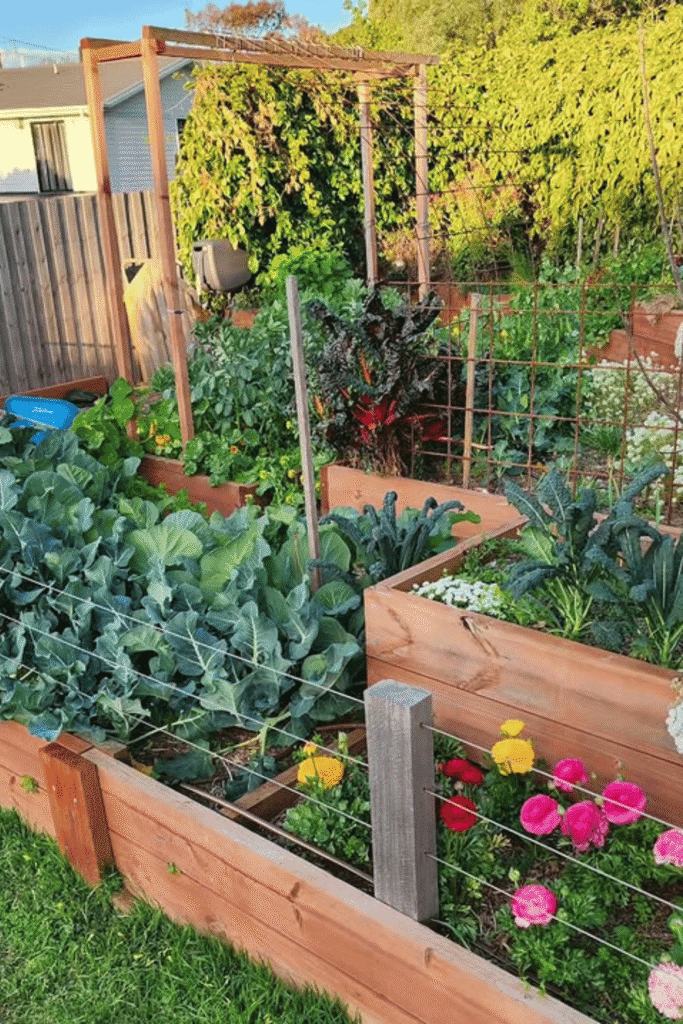
Cool-season crops are great to plant early in the spring before the weather really starts to heat up. Greens, carrots, and other cool-loving veggies will thrive when temperatures are still mild. As the seasons change and it gets hot outside, you can start planting warm-season crops that love plenty of sunshine.
Mixing cool-season crops with warm-season plants will allow you to keep harvests coming and prevent all of your crops from ripening at once. You could plant one set of cool-season crops in early spring. When those are nearing the end of their lifecycle, another batch of summer crops can kick in. Rotate your crops in this way and your small garden will be able to feed you well into the fall.
Growing your garden in this staggered way will also encourage you to be thoughtful about your planting plan. Instead of viewing your whole garden as one place to plant veggies, you’ll learn to break it into seasons and rotation. Taking care to plan your garden will help you end up with a healthier, more bountiful harvest.
8. Don’t plant everything at once, practice succession planting
Succession planting might sound like a complicated gardening technique, but it’s quite the opposite. It simply refers to the practice of sowing seeds or planting veggies intermittently instead of all at once. When your whole garden isn’t planted at once, you’ll use succession planting to keep your beds and containers filled with crops throughout the season.
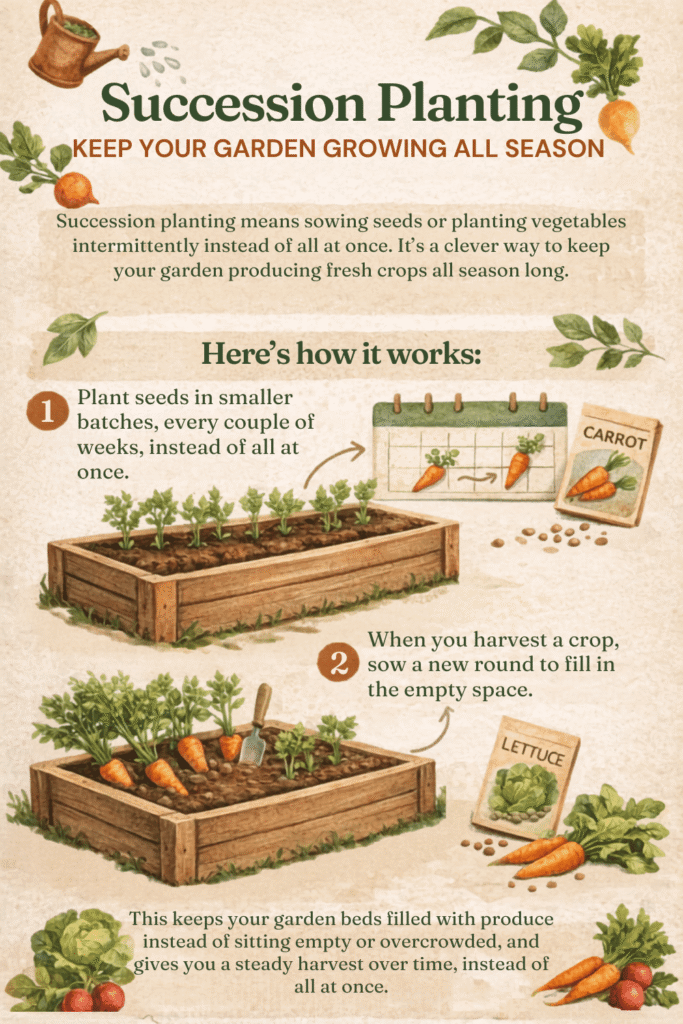
Let’s say you have a packet of carrot seeds. Instead of planting the whole thing at once, only plant half of those seeds. When it’s time to harvest those carrots, you can plant the rest of your carrot seeds. You’ll have a small harvest now and another later on instead of lots of carrots all at once.
Succession planting works with all kinds of vegetables, especially fast-growing leafy greens. Once you harvest or pull up a crop, immediately plant something new in its place. You can practice succession planting in every bed and container in your small garden. Since there’s less risk of wasted space in a small garden, take every opportunity to grow new veggies.
Rather than having all your vegetables ripen at once, succession planting spreads them out. You’ll still have plenty to harvest each week without feeling like your crop is all gone at once. Succession planting can help make a small vegetable garden more manageable.
9. Tuck Flowers In With Vegetables To Invite Beneficial Insects
Sprinkling some flowers throughout your veggie patch is such a sweet way to soften the space and make it feel friendlier, but did you know it can also be helpful? When you tuck a few flowers in amongst your vegetables, they can help attract beneficial bugs. This is especially handy when you’re working with a small space and want to do everything you can to keep your mini garden happy and healthy.
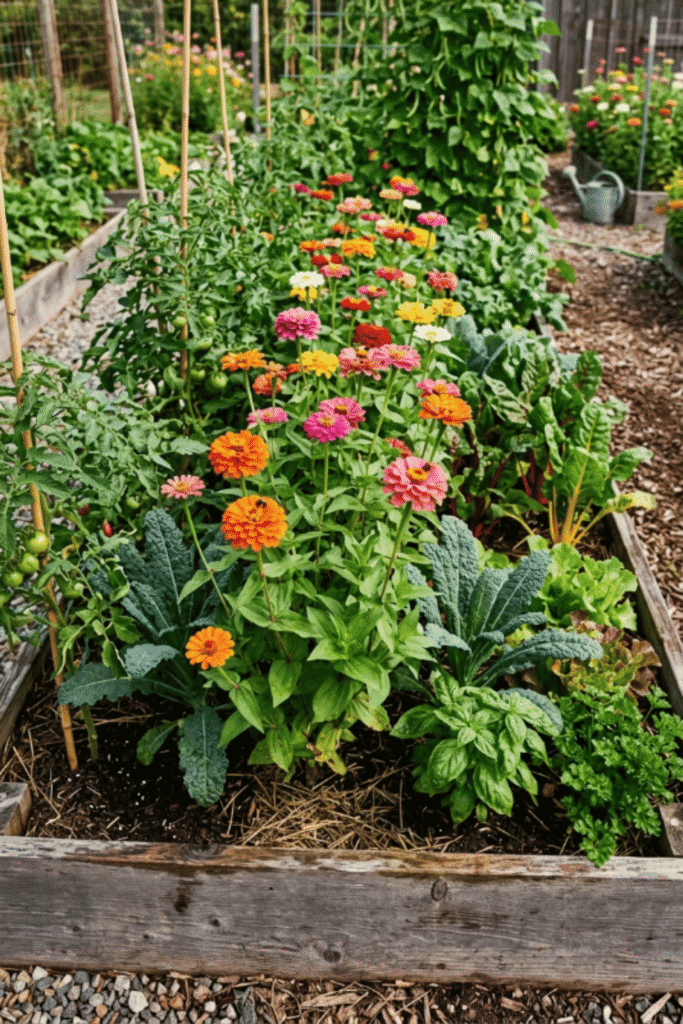
Zinnias are one of my favourite flowers to use for this. They’re happy faces that will bloom reliably with minimal effort from you. They add lots of colour and can help your veggie garden feel more layered, too.
When your vegetables are mixed with something eye-catching like flowers, it helps the space to feel less sterile or completely utilitarian.
The bonus? Helping out your pollinators. Any flower you put in your vegetable patch is going to encourage more bees and other beneficial insects to visit. That kind of balance is exactly what a small garden needs.
If you want your own little vegetable garden to feel like a cuter and more productive space, try working in a few flowers. They can really change the overall vibe of your garden and help it to look fuller without detracting from your vegetable plants.
10. Create A Keyhole Garden For A Smart Small-Space Layout
If you want your little vegetable garden to feel functional without sacrificing style, try giving a keyhole layout a shot. A keyhole garden is shaped so you can access more of the bed without reaching as much. There is often some sort of cut-out arch or section that allows you to get closer to the middle of the bed. For a small space, that can make your garden feel much more user friendly.
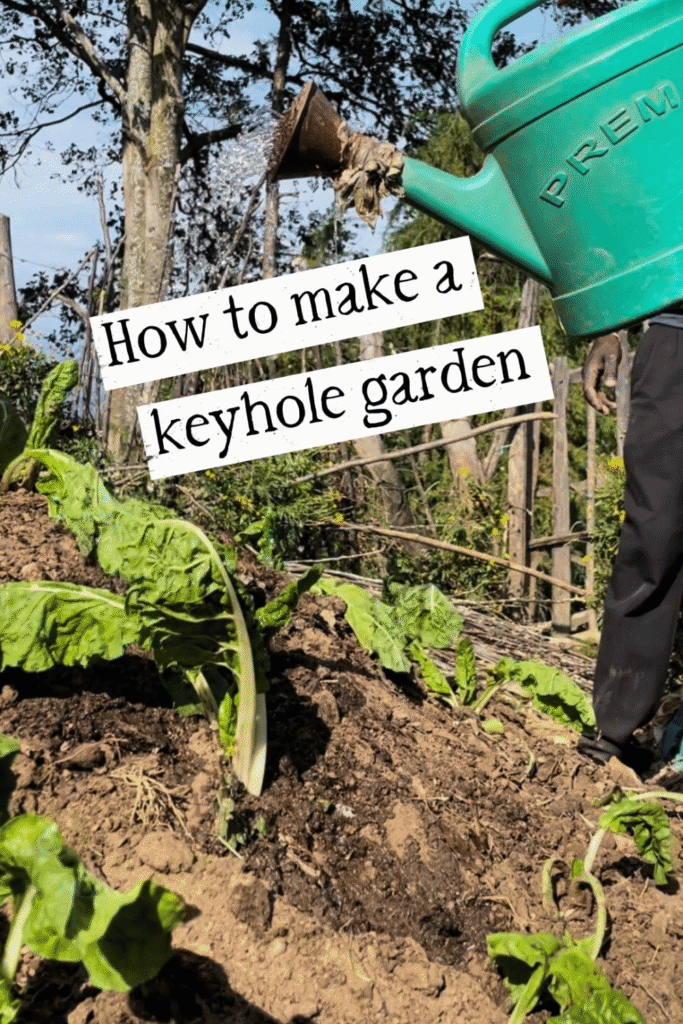
I love how accessible everything is in a keyhole garden. Instead of having to overreach on bigger beds or stepping where you shouldn’t, you can get to more of your plants at better angles. Everyday tasks like watering, harvesting, and weeding become so much easier.
It also makes hand watering your plants way more realistic. When your whole bed is easily accessible, watering is less of a hassle. Things that are convenient are often easier to keep on top of in small spaces.
A well-designed keyhole garden can be a great choice if you want your veggies to feel organised and beautiful. It has a certain charm that can soften the space while also giving your garden tons of functionality.
11. Create a straw-bale garden if you have difficult soil
Growing in straw-bales is such a great idea if you have poor soil or hard ground. If the ground you have for your outdoor space is heavy clay, stony, awkward to tend, or not really ideal for growing the way you want, growing in straw lets you bypass some of those challenges. Instead of being wholly dependent on the soil beneath, this type of garden allows you to grow with a clever workaround.
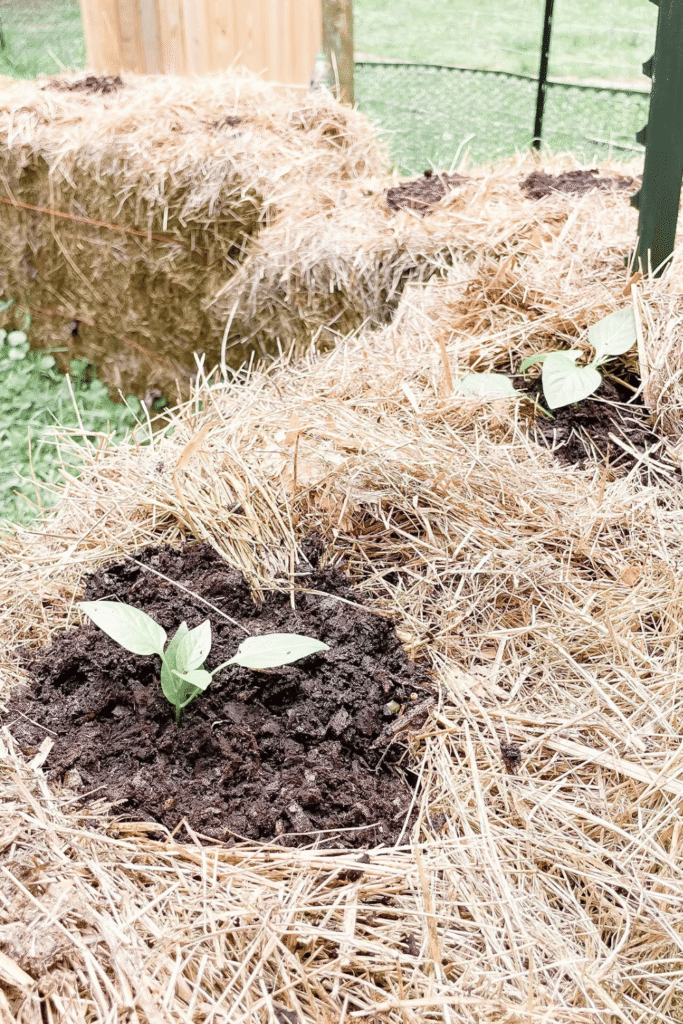
It’s also great because you can use straw-bales to create something temporary rather than permanent. You never have to build permanent beds or dig out a section of your yard just to get started. That’s ideal for people experimenting with their space, dealing with areas that just don’t work for typical gardens, or who want something flexible that doesn’t overwhelm them.
If you rent your home or are new to growing your own veggies, a straw-bale garden is also wonderful because it lets you set things up without totally altering the space. You can keep your garden simple and manageable while still enjoying all the benefits of growing your own food. For those who want to start gardening but are discouraged by rocky or hard soil, straw-bales can be an easier entry point than trying to amend everything at once.
Far from feeling cheap or makeshift, a straw-bale garden can actually look adorable once you get everything planted. Because it is temporary, you can place it anywhere in a small vegetable garden to help expand your growing options.
12. Map out your garden layout carefully
Plant placement can have a big impact in a small garden, since every vegetable affects its neighbors. When space is tight, planning where each crop will go can help you make the most of every inch. Think about your favorite veggies not only as plants you want to grow, but where they will live throughout the season. Layout makes all the difference in small vegetable gardens.
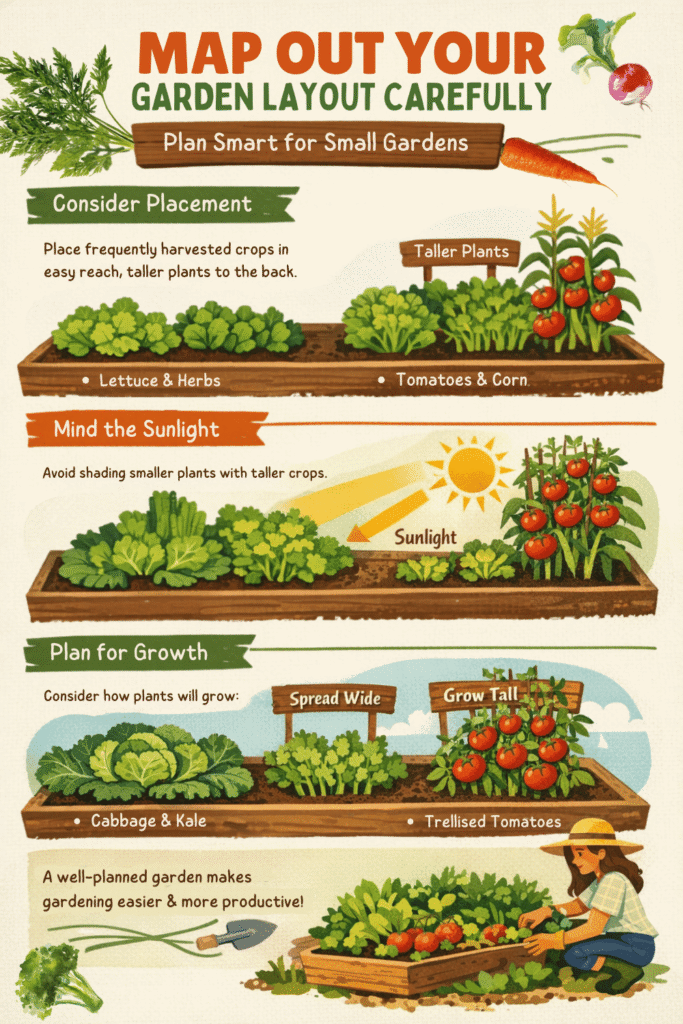
Take reaching distances into consideration before you decide. Plants you want to grab from frequently or harvest over time should live where you can easily reach them. Leave taller or lower maintenance crops for the back row or towards the center of the bed. Having to reach across your garden each time you want to weed or harvest will feel more tiring than it needs to be.
Sunlight is another important consideration. You want to make sure that taller plants aren’t blocking shorter plants from sunlight. In smaller spaces where every plant is closer to its neighbors, putting a big plant in the wrong spot can leave the bottom of that plant and everything around it suffering from too much shade.
Another layout trick is to think about how each plant will grow to its full potential. Leafy greens might spread wide but only grow to salad bowl size. Other vegetables, like tomatoes, grow upwards when given a trellis or cage. Planning for these dimensions up front can help you place taller plants strategically so they don’t cast excessive shade on other crops.
With a little careful planning, your small garden can feel orderly and relaxing. When you aren’t constantly reaching too far, adjusting plants for sun exposure, or dodging crowded crops, you can enjoy every little bit that you’ve grown.
Before You Go...
Before You Go...
Just because you have a small veggie garden doesn’t mean you can’t have an abundant one. Efficient planning and a few smart choices can help you optimize your growing space and end up with something you’ll be proud of.
Make use of all the growing space you have and you CAN grow A LOT in your backyard. Choosing crops that know will do well in your growing conditions will help you even more.
If you have raised beds, are container gardening, or only have a few small pots… you can still create a space you enjoy. One that gives you a gorgeous harvest.